Even before we are born, music has the ability to shape our cognitive processes. Babies listening to music in the womb are more likely to have better speech sound processing and develop stronger pattern recognition skills. A study carried out in 2013 (Partanen E et al.), showed that exposing an unborn baby to music had a long-term effect on their brain. It was found that newborn babies could remember a version of 'Twinkle, Twinkle, Little Star' played to them in the womb and responded differently when alternative versions were played.
In the early years of life, music continues to play an important role in developing the emotional sensitivity of babies, toddlers and young children. During this time of rapid development, it has been found that exposure to singing or playing an instrument can improve children’s emotional sensitivity (Destiana, 2017).
As children become school pupils, their exposure to music changes from just social, to educational, as they begin music lessons as part of the primary curriculum. While sometimes overlooked in favour of more traditionally ‘academic’ subjects, the importance of music in children’s education and development should not be underestimated, particularly when it comes to wellbeing and positive mental health.
The Model Music Curriculum (2021) emphasises music’s contribution to personal development and wellbeing. Schools are encouraged to integrate music into the wider curriculum, linking it with PSHE and mental health initiatives.
How does teaching music help children to develop emotional intelligence?
- Singing, playing instruments and listening to and appraising a wide variety of music allows children to explore their feelings and emotions through a creative medium. They develop the ability to recognise and name emotions, as well as learning how to represent feelings through music.
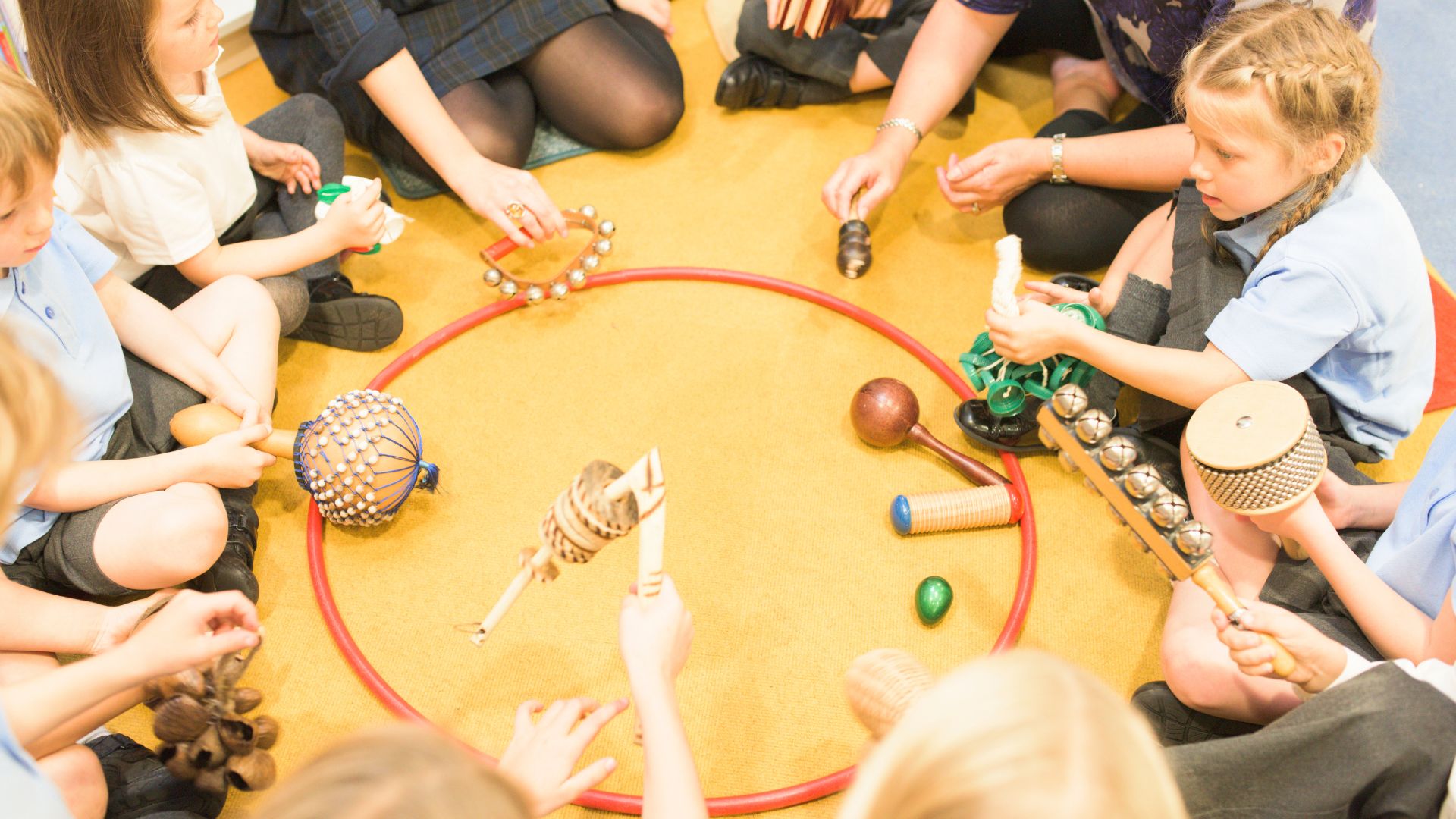
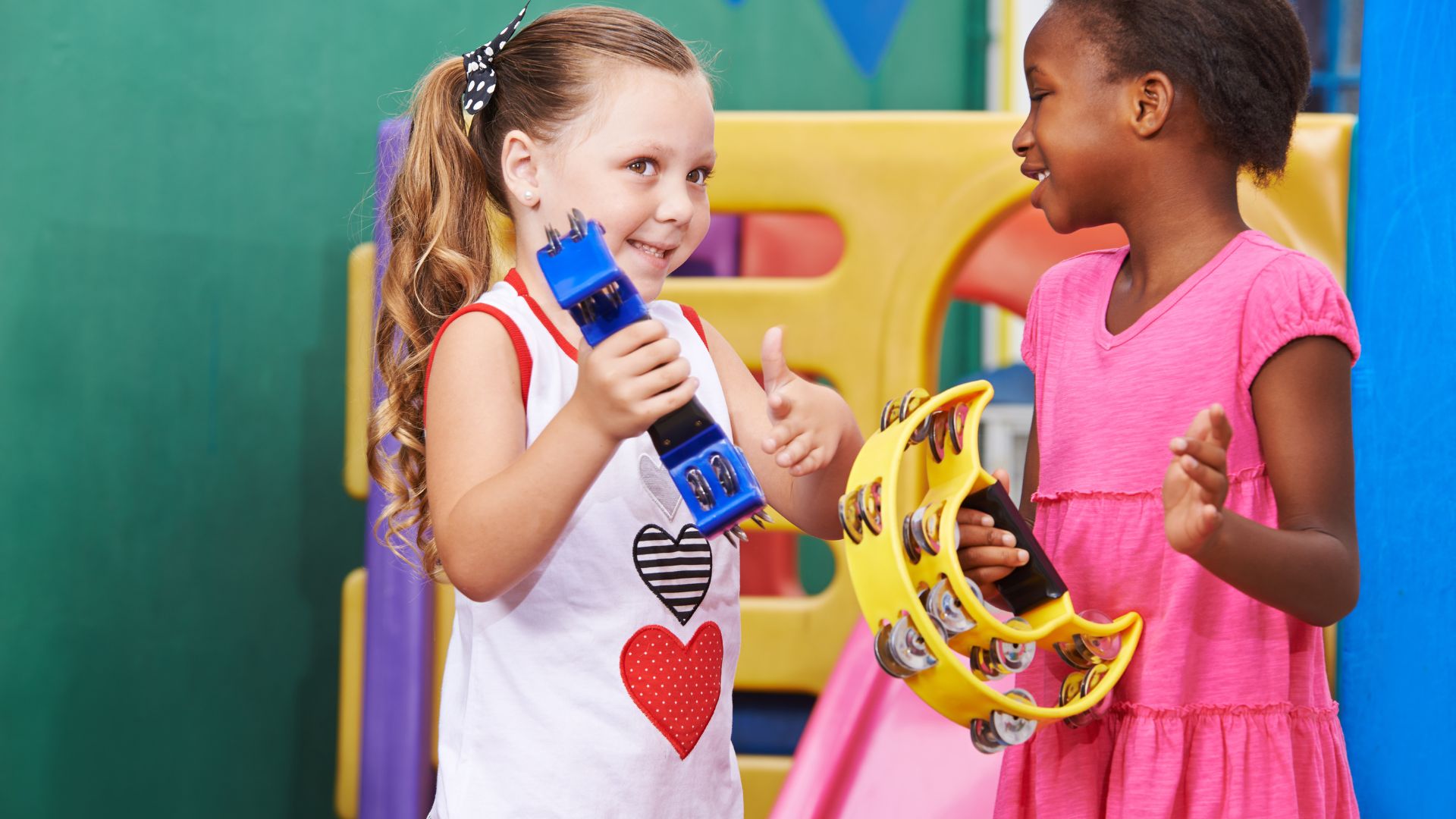
- Working in groups to compose, play or create encourages empathy and teamwork and relationship-building. Group performances, ensemble work and classroom singing require pupils to listen carefully to others, balance their contributions, and respond sensitively. These experiences mirror real-life social interactions, strengthening pupils’ ability to understand and respect the emotions of others.
- Pupils learn to develop self-regulation and confidence through persistence and perseverance, whether as they are learning an instrument or preparing for a performance.
- Taking music outside the classroom through singing in assemblies, taking part in workshops or encouraging whole-school creative composition projects or performances can all reinforce emotional literacy and wellbeing for pupils.
By embedding music deeply into the primary experience, teachers equip children with tools to manage emotions throughout life. Whether calming anxiety, boosting mood, or connecting with others, music becomes a lifelong ally in emotional health.
References:
Destiana, E. (2017). The Effect of Music On The Emotional Intelligence Development Of Early Childhood.
Partanen E et al. (2013). Prenatal Music Exposure Induces Long-term Neural Effects.